FIERST
From Inclusive Education to Real Scale Transfer
From Inclusive Education to Real Scale Transfer (FIERST) tackled educational inequalities in disadvantaged schools by establishing Professional Learning Communities and upscaling best practices in inclusive education across three European Union countries
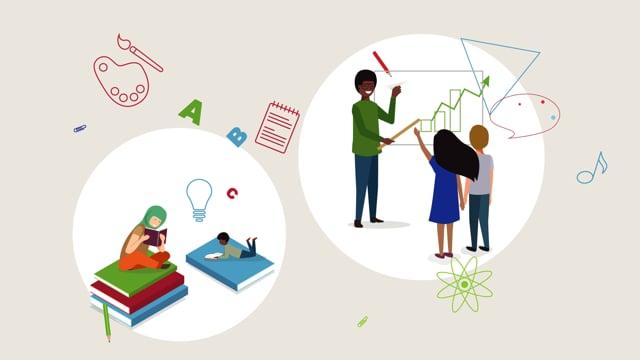
The From Inclusive Education to Real Scale Transfer (FIERST) project was co-funded by the European Commission through the Erasmus+ programme and was run by a consortium of six partners, including public authorities, researchers, and Teach For All network partners across the European Union. The project also involved three associated partners, including the Bulgarian Teacher Union and two schools from Sweden and Estonia.
FIERST was implemented between 2018 and 2020 and aimed to identify, select, and upscale best practices in inclusive education addressed to students from disadvantaged communities.
FIERST built on four mutually reinforcing activities, namely:
- Identify best practices and prepare them for transfer to educators (i.e. teachers, school principals and vice-principals, school psychologists, special needs teachers, etc.)
- Select beneficiary schools and teachers for the first and second year of upscaling
- Create training curricula for the transfer of best practices
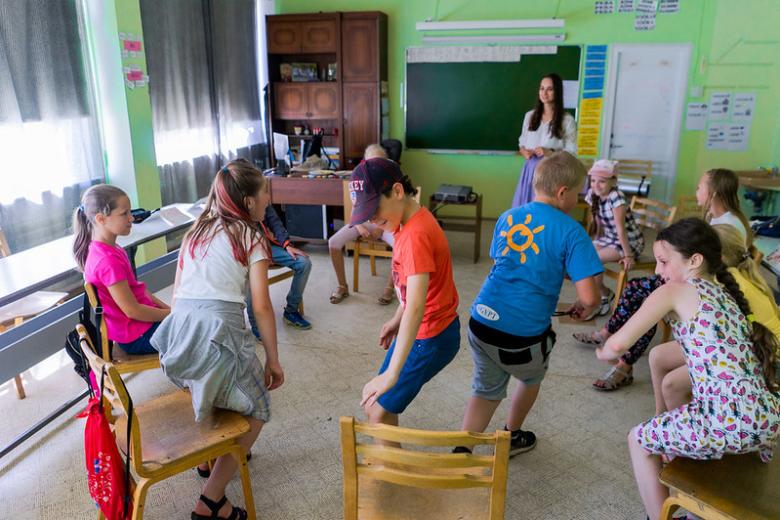
- Transfer best practices through training sessions and profesional learning communities set up in the beneficiary schools and reaching a total of 430 educators from 45 schools
- Evaluate best practice transfer through surveys and monitoring visits and summarise results in an evaluation report
- Conduct four international and eight national events, including workshops, attended by 2000 people
- Summarize lessons learned in a manual on effective upscaling of best practices and recommendations for action at the national and European levels
Data collated over the lifetime of the project confirmed the effectiveness of the FIERST method of approach and, in particular, the value add of the professional learning communities as a tool for effectively supporting the upscaling of social inclusion-related best practices.
Data also revealed a high level of satisfaction of participants and beneficiaries in regard to the quality of the training and support offered, the professional learning communities, and the impact on beneficiary students:
- 96% of participants surveyed felt that the FIERST training programmes helped them better understand student-centred teaching
- 86% increased their confidence in applying inclusive education practices in their classrooms
- Over 80% believed that the work they did through the professional learning communities was beneficial to them in their respective schools
- 90% were confident they can now address the learning needs of their most advanced students and about 70% of respondents were confident they can help their most challenging students learn
- Over 95% believed that their students could adjust their behaviour and thinking and increase the effort they put into school.
The following are a variety of project resources from each partner country, as well as the tools that supported the partner organisations’ development of strategies for upscaling best practices in inclusive education:
Final Report Executive Summary
The Executive Summary of the implemented project includes the main activities carried out and explains to what extent the results achieved contributed to the aims of the project and the objectives and the EACEA/07/2017 call for proposals
Key results and recommendations at the national and EU levels
Key recommendations from the project including best practices, policy recommendations, and other insights surfaced during the project, were gathered in this white paper aimed at national and EU-level decision-makers, the Teach For All network, and the global education community.
In addition to the above white paper, another key output of the FIERST project at the country level took the form of a document outlining policy recommendations to implement social inclusion-related projects inspired by the FIERST method of approach and addressed to interested policy makers and other key education stakeholders. These are available in:
How can best practices for inclusive education be upscaled effectively?
Important insights and recommendations for scaling best practices for inclusive education were gathered in this manual on How to Upscale Best Practices for Inclusive Education Effectively
In addition to building and testing a set of best practices in their own contexts, each partner’s work will contribute to creating a tool aimed to help others across Europe as they seek to gather, implement, and spread best practices.
Final Evaluation Report
The FIERST Final Evaluation Report 2021 offers evidence of the effectiveness of the implementation of this transnational multilateral project.
Data collection tools
The following data collection methods and tools were implemented to collate data and gather evidence on the effectiveness and positive impact of the best practices on students and teachers.
How to run a Professional Learning Community
Read here the Guidelines on how to run PLC
Learn more about Teach For Bulgaria's work
- Read here about how 150 teachers from 18 schools from different parts of Bulgaria came together to experience a FIERST-hosted training in March 2020
- Read here about the From Inclusive Education to Real Scale Transfer (FIERST) Conference that took place on June 22, 2020.
- Read here about the virtual FIERST training hosted by Teach For Bulgaria with over 100 teachers, experts, and representatives from the Ministry of Education and Science from different parts of Bulgaria despite the early stages of the pandemic
FIERST conference on Inclusive Education Across European Contexts
April 5th, 2019, Bucharest, Romania
Learn more about our work with European Union institutions

For periodic updates about Teach For All’s engagement with the multilateral community, subscribe to the Teach For All in the Global Discussion newsletter