How Ensina Brasil is empowering educators to lead climate action
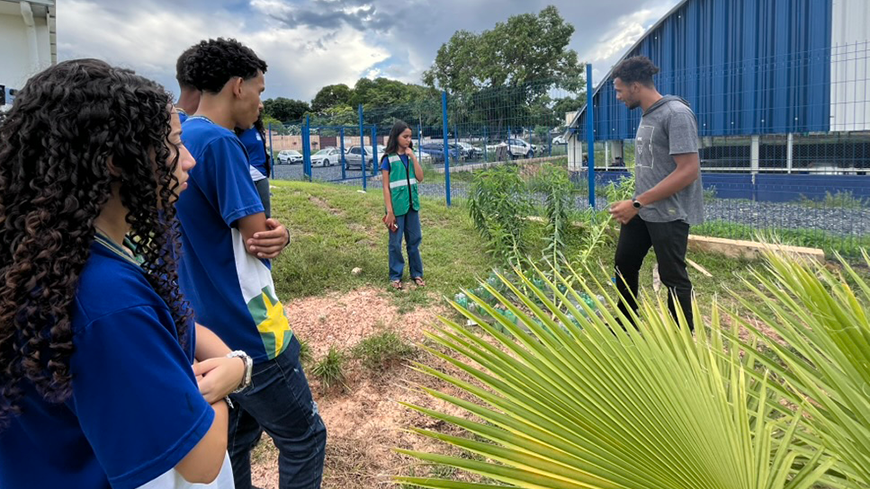
On a humid morning in Brazil, students from Escola Água Maria de Camunima gather outside their classroom with a toolbox and a well-developed blueprint. They are building an eco-solar mosquito trap—an innovative solution using solar energy and easily accessible materials to catch Aedes aegypti mosquitoes. The class recently learned about the climate crisis and was able to link the surge of dengue cases in their community to environmental changes, such as rising temperatures and unpredictable rainfall, which create perfect breeding grounds for mosquitoes. They studied the effects of dengue on students and found that when students contract dengue fever, they end up missing school and losing valuable learning time. Having mapped this challenge, they are now building a prototype to test their idea and work to protect both their health and their right to learn.
This story, among many others, has been made possible by Ensina Brasil’s Climate Education and Leadership work, supported in part by Teach For All’s Climate Education and Leadership (CEL) Fund. Our commitment to this mission was born from a clear realization: the climate crisis is deepening the learning crisis in Brazil. In Brazil, students don’t have to learn about climate change from books—they are already living through its impacts, from floods and heatwaves to prolonged droughts. These disruptions are not abstract; they shape students’ daily realities. In 2024 alone, climate-related events interrupted schooling for at least 1.17 million students in Brazil, with floods and extreme weather among the leading causes. When disasters strike, schools often close for extended periods, causing students to miss valuable learning time. Those from underserved communities are disproportionately affected, facing not only interrupted education but increased risks to their health, wellbeing, and future opportunities. Given this context, schools become essential spaces for engaging students to understand and respond to these impacts.
While environmental education is technically part of Brazil’s national curriculum, climate learning is often fragmented and inconsistent. Most teachers are not supported with the training or resources they need to cultivate students’ deeper climate knowledge and agency. A 2024 survey conducted by Nova Escola, in collaboration with the Office for Climate Education (OCE), of over 13,000 Brazilian teachers found that while 98% recognized the importance of teaching about climate change, only 25% had received specific training, and 23% felt little or no confidence discussing it in the classroom. Our climate education and leadership program aims to address this gap by equipping Ensina Brasil fellows and alumni with the knowledge, skills, and tools they need to engage students and their communities.
Our approach is built on three strategic pillars: delivering climate and leadership training for educators, supporting student-led projects, and embedding climate education deeply into the organization’s core. For training, we offer a comprehensive 11-hour course and synchronous workshops that go beyond abstract theory, helping fellows and alumni integrate climate education into their lessons. This training also equips them to nurture students’ creativity, critical thinking, and problem-solving skills, enabling students to design actionable solutions for the climate and environmental challenges affecting their schools and communities. To extend learning beyond the course and workshops, we launched ClimaLab, a community of practice for fellows, alumni, and staff working in climate action. ClimaLab provides a space for participants to engage in discussions, share lessons learned, and co-create tools. This year, we aim to include policy makers and researchers in the community so that educators can learn first-hand, while their classroom and community insights can help inform decision-making. This approach is designed to cultivate teachers’ expertise, equipping them to guide students in designing and implementing meaningful climate projects.
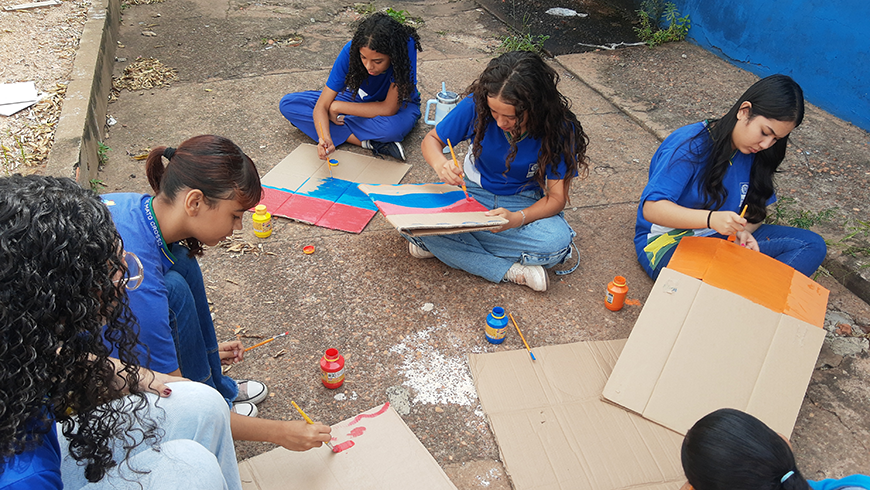
Once fellows and students are implementing these projects in their schools, we provide targeted support to help them expand their impact. Through a dedicated call for proposals, we select and award mini-grants to several innovative initiatives—such as the eco-solar mosquito trap—providing both financial resources and mentorship to fully implement their ideas at scale. The idea is to support students in taking their innovations and solutions beyond the school walls and into the community.
For this work to be sustainable, we recognize that CEL cannot be a ‘one-off’ project—it must be deeply woven into every part of our organization. We’ve started this aspect of the work by integrating CEL into our fundraising and partnerships strategy. We aim to form partnerships and collaborations with organizations focusing on climate action. We’re also positioning Ensina Brasil as an organization that understands the devastating impacts of climate change on education and works to strengthen climate education and leadership in schools. Our participation in COP30 last year was a direct extension of this strategy. At the conference, through ClimaLab, we shared an open letter and manifesto reaffirming the importance of CEL, showcased our work, and brought insights from the wider CEL network community across the Americas, ensuring regional perspectives were represented in the conversation. Integrating CEL is an ongoing effort, and through the CEL Fund community of practice, we continue to learn alongside other Teach For All partners leading CEL in their own contexts. Together, we have explored themes such as fundraising and partnerships, MEL, and alumni engagement.
The climate crisis is a learning crisis—but it’s also an opportunity to redefine leadership in our schools. At Ensina Brasil, we believe education is one of the most powerful—and underutilized—tools to combat climate change. By equipping our network with the knowledge and skills to lead, we are empowering students to shape a better today and tomorrow for their communities. We invite you to join us in this mission, because when we prioritize climate education and leadership, we aren’t just securing the future of Brazil—we’re helping secure the future of the whole world.