From individual effort to collective impact
Why career education needs collective leadership
Before joining Teach First Deutschland (Germany), I worked as a PR manager for a large international company. Over time, I realised that what I was missing was not a new role, but a deeper sense of impact, self-efficacy, and appreciation. I rarely saw how my work made a tangible difference in people’s lives.
I wanted to work in a context where contribution, relationships, and outcomes truly mattered.
That search led me to Teach First Deutschland in 2021, during the pandemic. Teaching brought me closer to people and into a system I had previously only observed from the outside. At a time when education was discussed mainly through deficits, I wanted to understand what was actually happening in classrooms.
What the classroom revealed
I began teaching at a school in Berlin on the first day it reopened after lockdown. Standing in front of students whose faces were mostly hidden behind masks, I sensed a disconnect immediately. Learning inside the classroom often felt far removed from life beyond it. Many students struggled to see how school related to work, society, or their own future.
Since then, one question has stayed with me: how can we meaningfully connect school with the world outside it?
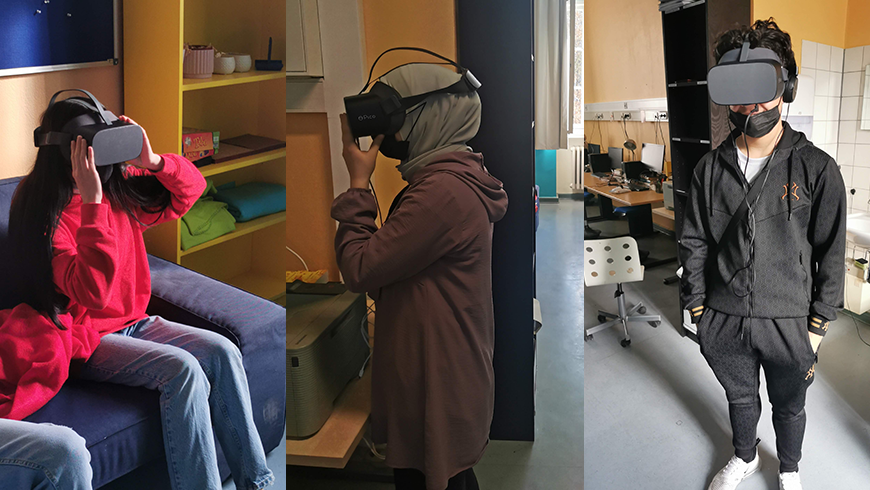
Like many teachers, I tried to bridge this gap through individual initiatives, from career sessions to project-based learning. These moments mattered, but they rarely lasted. Activities depended on individual energy and often felt disconnected, leaving students without a clear sense of how these experiences fit into their overall career journey.
The issue was not motivation, but structure. Career education was treated as an additional task, often placed on one teacher alongside a full workload. When everyone works alone, impact remains fragile.
From isolated activities to shared responsibility
At the same time, a broader opportunity emerged. Teach First Deutschland and the Chamber of Industry and Commerce in Berlin recognised a shared challenge. Berlin faces a growing mismatch between young people seeking apprenticeships and a large number of unfilled training positions. Opportunities exist, but guidance, coordination, and connection are often missing.
When a new role in career guidance was created at the Chamber at my school, I recognised it as the missing link. I took on this role as one of the first career guidance managers in Germany. Without a blueprint, I looked to the Teach For All network and, through the global organization, was able to connect with and learn from the Career Leaders programme at Teach First (UK), which treats career education as a strategic, school-wide responsibility.
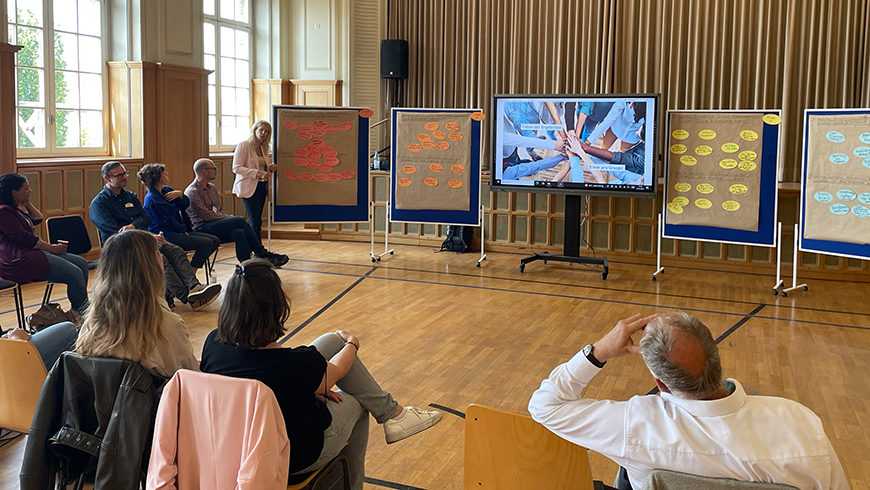
At the pilot school, we brought teachers, school principals, students, and external partners together to ask different questions. Which activities create impact? Who is responsible for what? How do we learn and improve? For example, instead of one teacher informally organising company visits, career education is now planned through regular joint meetings involving school leadership, teachers, students, and the career guidance manager. Responsibilities are shared, timelines are aligned, and progress is reviewed together.
Over time, clear changes became visible. Career guidance moved from isolated activities to a shared concept with defined processes and routines. Teachers gained clarity about their role. School leadership became actively involved in steering the work. Students were included in planning and feedback. External evaluation confirmed this shift. Career education evolved from a set of activities into a shared understanding across the school, with clearer roles, responsibilities, and collective ownership.
Connecting systems to create lasting impact
Following the success of the pilot, we partnered with the Berlin Senate Department for Education, Youth and Family and expanded to additional schools. Scaling was approached carefully, with a strong focus on trust and learning. This approach also shaped our work in vocational schools, where cooperation managers support schools in building networks with employers. Where companies previously relied on personal contacts with individual teachers, partnerships are now coordinated centrally, creating clarity for companies and continuity for schools.
So what does it take to meaningfully connect school with the world outside? Not isolated projects, but coordination, shared ownership, and roles designed to bridge systems. Career education matters not only for students, but equally for teachers, school leaders, and companies. Teachers need clarity and relief. School leaders need structures they can steer. Companies need guidance on how to engage with schools effectively.

What started as a single role grew into a pilot, then into a project, and ultimately into the Department for Career Guidance and School Collaboration within the Chamber of Industry and Commerce.
For me, this reflects the purpose that first led me to change my career: creating visible impact, enabling self-efficacy, and building real relationships across systems. When career education is no longer driven by individual effort, but stewarded through clear structures and collective responsibility, it becomes more than guidance. It becomes a shared commitment to opening real opportunities for everyone involved.