Advocating for education and collective leadership for sustainable development at UNGA 81
Last week, Teach For All engaged the global education ecosystem during the 81st United Nations General Assembly (UNGA 81) in New York City. With UNGA 81 serving as a precursor to the 2027 SDG Summit and the 2027 review of Sustainable Development Goal 4: Education, the week presented a crucial opportunity to energize the sector around the importance of education for sustainable development.
Throughout the week, Teach For All's engagements focused on spotlighting the work of the network and the Global Institute for Shaping a Better Future, urging philanthropic investments in collective leadership for sustainable development, and elevating diverse voices from across the network.
Education for sustainable development at Education House
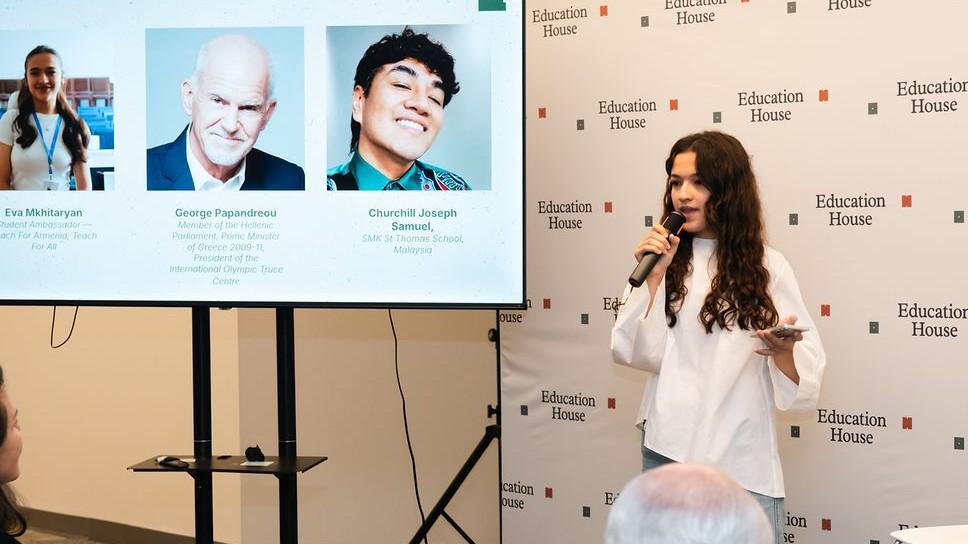
To position education and diverse voices from the field as key drivers for sustainable development, Teach For All co-convened Education House @ UNGA 81 at our Manhattan offices on September 22. The event featured 34 sessions in collaboration with 120 organizations, including four in which Teach For All was involved:
- Learning from BOLD fellows: In a session titled "Schools Already Living the Shift," attendees heard from leaders of the Beacons of Learning Design (BOLD) Fellowship, a collaboration between the Global Institute for Shaping a Better Future and Transcend. The session highlighted how innovative learning environments like TUMO (Armenia), A Favor del Niño (Mexico), and LEAD Academy (USA) have made unique and intentional design choices that enable students to develop holistically while also achieving rigorous academic outcomes.
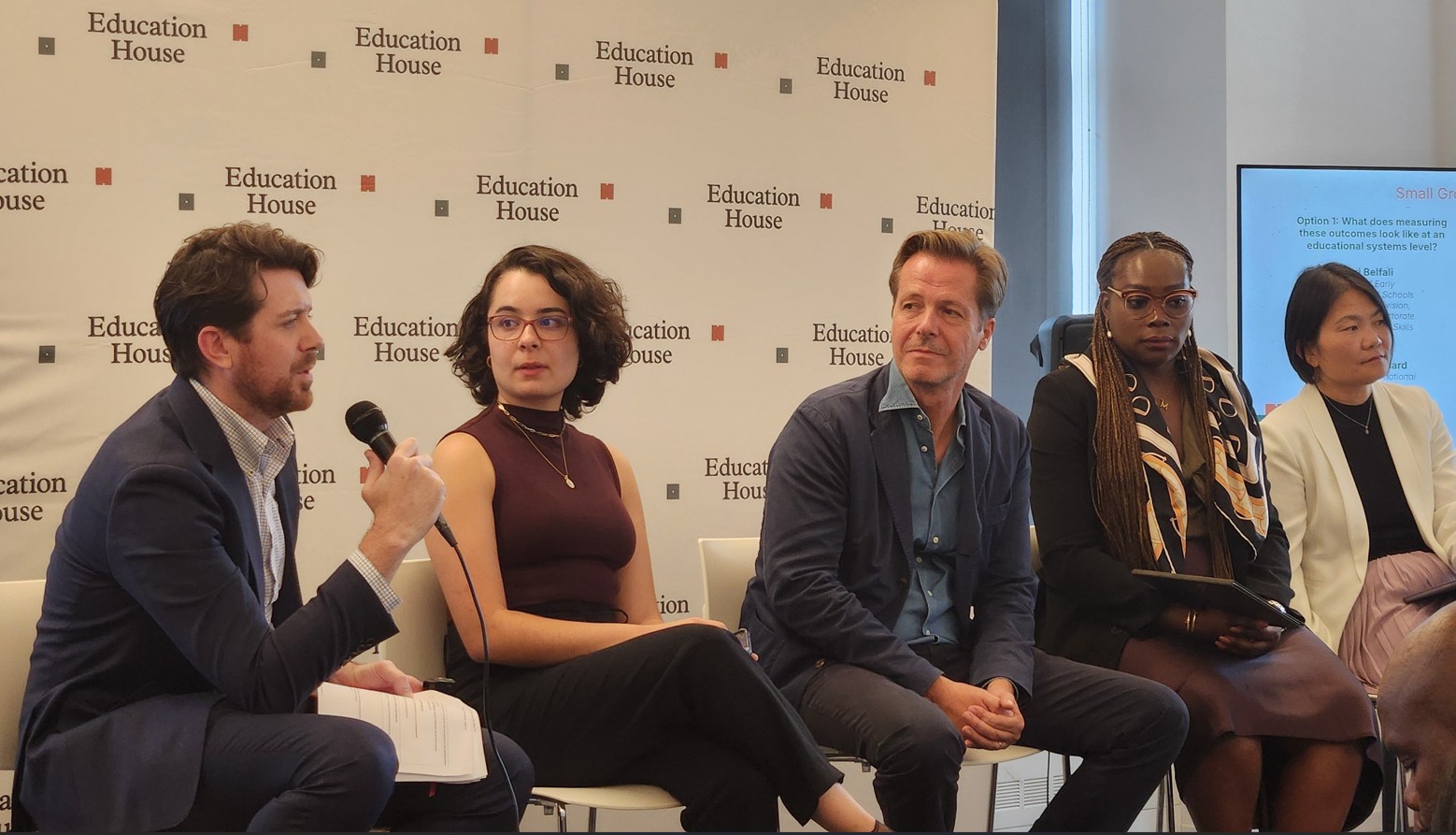 Measuring what matters: Co-hosted with the OECD and Learning Planet Institute, the session "What Student Outcomes Matter for the Future—and What Evidence Base Do We Need?" invited diverse actors to explore how education systems and classrooms can orient toward holistic outcomes by better measuring student purpose, awareness, connectedness, wellbeing, and agency. The session explored practical applications to measuring student holistic outcomes to monitor progression across education systems and to support teacher and student development. Read reflections from the session co-authored by Robbie Dean, Senior Director, Research, Evaluation & Network Learning at Teach For All; Molade Adeniyi, CEO of Teach For Nigeria; and OECD PISA lead Yuri Belfali.
- Reflections and insights from the Global Institute for Shaping a Better Future: In the session “What Are We Learning About How To Shape a Better Future?” Teach For All CEO Wendy Kopp and Global Institute Director Cheryl Fernando brought participants together to reflect on the Global Institute’s learning so far. The session explored emerging insights into developing educators, building shared purpose across systems, reimagining learning environments and measurement, and harnessing AI to support holistic student development.
- Exploring education for human flourishing: Held with Cambridge Partnership for Education, HundrED, International Baccalaureate, Learning Planet Institute, OECD Education and Skills, and Salzburg Global, the session “Education for Human Flourishing: What Works in Practice?” focused on practical examples and innovations advancing wellbeing, agency, purpose, and human development through formal and informal education, youth movements, and technology.
Advocating for collective leadership development
Among Teach For All’s major objectives at UNGA 81 was exploring how to increase investments in collective leadership development through the People First Community. During a gathering at the Ford Foundation Center for Social Justice, practitioners, funders, and researchers discussed why leadership development remains underinvested and what philanthropy must do differently to sustain systemic change. The panel urged philanthropy to fund the conditions behind the work, and not only the outcomes. That starts with mapping the ecosystem—the leaders, organizations, institutions, and coalitions already working on a shared challenge—before deciding where to invest; building leadership pipelines that find and support emerging and proximate leaders before the system has validated them; and investing in the relationships, infrastructure, and local ownership that enable collective leadership to continue after a grant cycle ends.
The focus on leadership also extended to a co-hosted fireside conversation, "Investing in People: Stories of Hope, Systems Change, and a Shared African Future." Bringing together 60 leaders from across philanthropy, government, business, civil society, and education, the event highlighted why investing in people is a primary opportunity for building a more equitable and prosperous future across the continent.
Student advocacy across the week
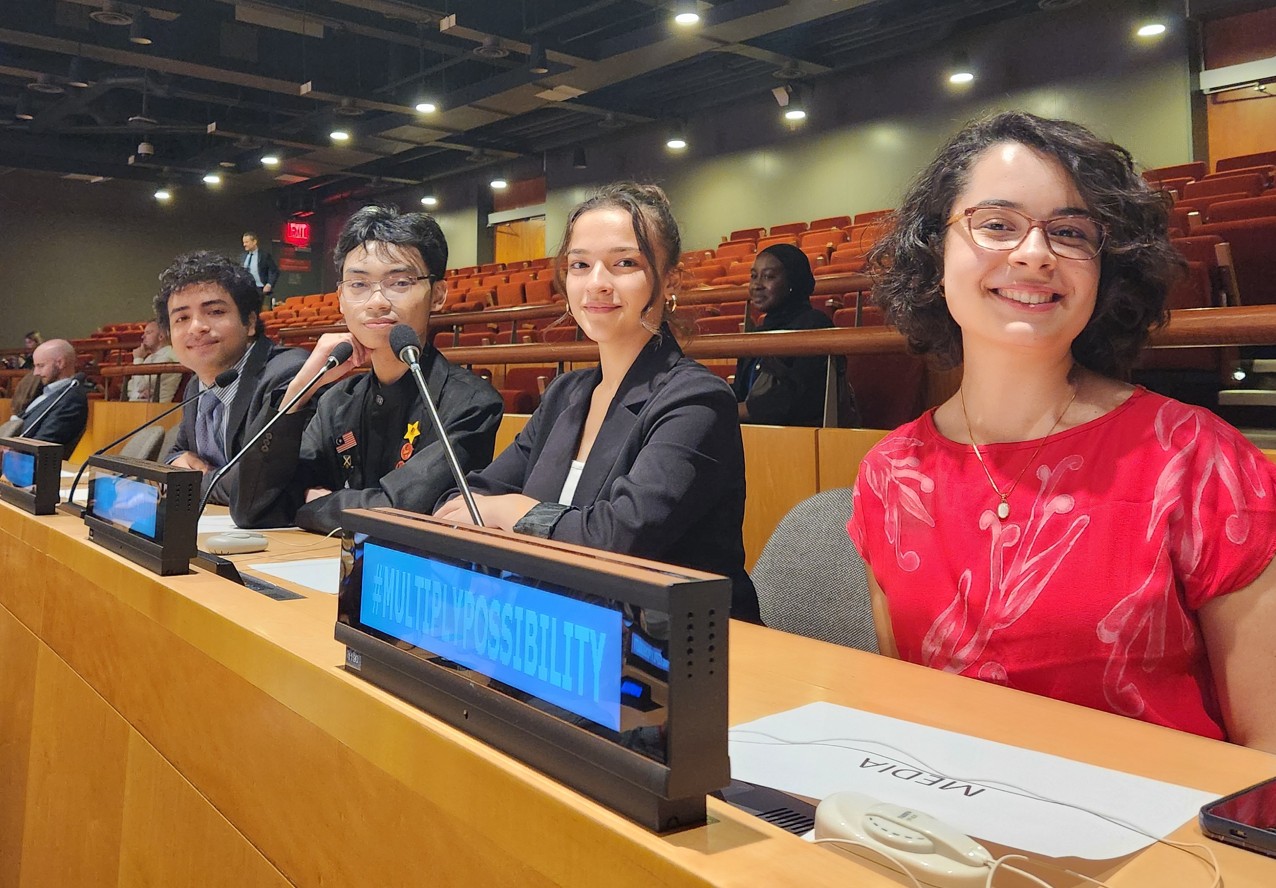 Throughout the week, the Teach For All student delegation of Eva Mkhitaryan (Teach For Armenia), Jhair Ventocilla (Enseña Perú), Khairi Abdullah (Teach For Malaysia), and Raquel Jardim (Brazil), brought youth perspective into rooms where the future of education, AI, climate, and financing were being negotiated. They shared their personal stories and their experiences as students, and consistently urged leaders to move from consulting young people to partnering with them.
On Monday, Khairi joined a CEO-level meeting of the Unlock Coalition, contributing to the coalition's strategy. Later that day at "Youth Skills for a Changing World" hosted by the World Scout Movement, he drew on his Melanau heritage from Kuching, Sarawak to challenge the room to recognize learning beyond the classroom. "How do we keep culture alive, not just by preserving the past, but by giving young people reasons and spaces to carry it forward?" he urged.
On Tuesday, Eva opened Education House with a personal reflection on the youth-adult partnerships that helped her find her voice. In the session "Co-Designing AI for Low-Resource Classrooms / Shaping AI for Education,” Jhair shared how AI had been the English tutor he couldn't otherwise afford in Peru, opening a path that led to founding Develop a Future, an initiative turning Peruvian literary works into interactive videogames now recognized by Peru's Ministry of Education. His provocation to the policy voices in the room: "What could students like me achieve if, instead of being taught to fear AI, we were taught to use it responsibly?" And at "What Student Outcomes Matter for the Future?" Raquel spoke about how a holistic education allowed her to find her voice, grow as a leader, and feel she could maximize her potential, crediting teachers who gave her space to develop creativity and leadership beyond the syllabus.
On Wednesday, Eva co-led a table discussion at "Architects of Tomorrow: Mobilizing AI & Philanthropy for Next-Gen Learning," urging philanthropy to reframe its central question from "What can AI do for students?" to "What kind of future do students want to create with AI?" The full delegation then joined the Global Partnership for Education's high-level event, "Multiply Possibility: A New Era for Education Financing," in the UN Economic and Social Council (ECOSOC) Chamber at the UN.
The delegation closed the week on Thursday by participating in discussions at the sessions "Unscripted: Intergenerational Connections for Hopeful Futures" at Goals House and at “How do we ensure that youth have the knowledge to tackle climate change and strengthen planetary health?” at 25 Broadway.
As we look towards 2027, Teach For All and our partners will continue to make the case that education and collective leadership development are essential to realizing our shared ambitions for sustainable development and ensuring our students can shape a brighter future, for themselves and all of us.