When schools and industry build together, students lead—and that matters more than ever in the age of AI
Santiago was 16 when he joined a career readiness program at his public school in Quito, Ecuador. He joined because his teachers had created space for something new: a chance to meet working professionals, understand what different careers actually involve, and start exploring his own future—opening up possibilities he had not previously experienced in his education.
By the end of the program, Santiago and his teammates had designed DESAHOG-ARTE—a mental health initiative using art as a way for young people to process and express the sometimes complicated emotions they carry. They presented it alongside eight other student-led projects to a panel of industry and civil society judges at the Ministry of Education auditorium in Quito. Their team was selected. The prize was a training program at the IDEA Institute of Universidad San Francisco de Quito, one of the country's leading centers for entrepreneurship and innovation. A door had opened for Santiago and his teammates.
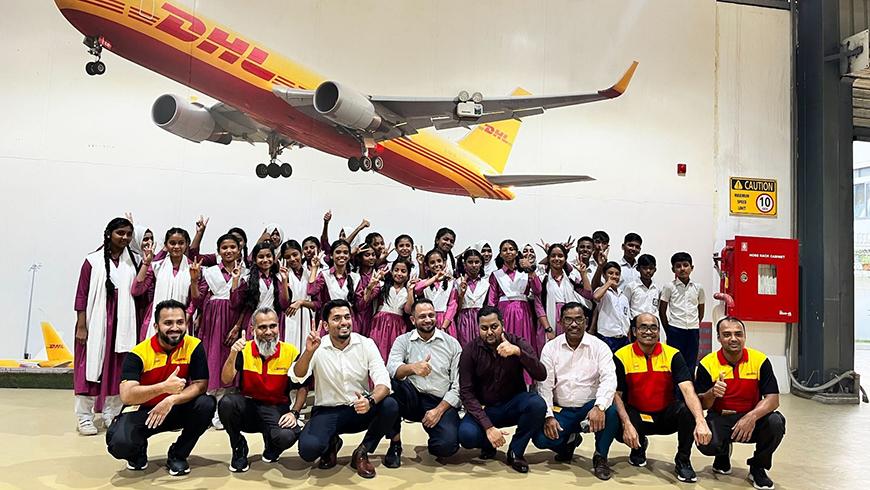
Santiago is one of 2,464 young people who took part in the 2025 Career Education and Leadership Accelerator, a Program of Teach For All's Future of Work Initiative developed in partnership with DHL Group through its GoTeach program. This collaboration builds on more than 15 years of partnership between Teach For All and DHL Group, during which GoTeach has supported career readiness and youth employability efforts across more than 22 countries worldwide.
The Career Education and Leadership Accelerator was designed to explore how these multi-stakeholder partnerships, combined with locally-led innovation, can move career readiness beyond isolated initiatives toward more sustainable and scalable approaches. In its most recent cohort, eight Teach For All network organizations across four continents worked alongside educators, DHL volunteers, and community partners over six months across 35 schools, while generating insights that can inform career readiness efforts far beyond the participating countries.
What Santiago experienced sits at the heart of one of the most consequential shifts the world of work has known so far. The World Economic Forum's Future of Jobs Report 2025, drawing on more than 1,000 employers across 55 countries, identifies leadership and social influence among the top skills employers consider essential today and among the skills rising in importance as we near 2030. And in the age of AI, human leadership has become essential. PwC's recent 2026 Global AI Jobs Barometer finds that in the United States, entry-level roles most exposed to AI are now seven times more likely to require traditionally senior skills like leadership. Building it in young people, early and deliberately, is one of the most important things education and industry can do together.
Partners—not guests—in the room
For years, employer engagement in schools has followed a familiar pattern. Professionals visit, share their experiences, and leave. Students gain a glimpse of working life. The opportunity to go deeper—to connect that glimpse to something they can act on—has often been missing.
What the Career Education and Leadership Accelerator explored was a different approach, one where educators and industry partners share responsibility for student learning from the start. Educators facilitate. Professionals arrive prepared. Students engage with meaningful problems and meaningful stakes. The encounter between a young person and a professional becomes something more than a visit.
Teach For All network partner Enseña Chile and DHL began by preparing corporate volunteers through a training process that introduced them to Enseña Chile’s mission, the realities of the school communities, and their role in supporting students’ career readiness alongside educators.
Together, DHL volunteers reached more than 85 students through career readiness activities designed to help young people explore future pathways and build confidence for the world of work. At José María Caro School, approximately 40 students experienced a sustained cycle of support with DHL volunteers. As a result, several students applied for internship positions for Enseña Chile’s Summer School, preparing résumés, participating in interviews, and later taking on logistical and administrative responsibilities under the guidance of their teacher. Their initiative and confidence illustrated how strong partnerships between educators and corporate volunteers can help young people see new possibilities for their future and take meaningful first steps toward them.
In Bolivia, six industry and civil society partners collaborated with Enseña por Bolivia educators to guide 127 young people through vocational reflection and personal life planning. Students explored their strengths, connected with local opportunities, and built concrete visions for their futures. By the end, the vast majority had defined clear goals and left with renewed motivation to continue their education—supported to think seriously about who they are and what kind of future they want to build.
When professionals come prepared to co-design with educators, experiences become deeper, and students begin to see themselves as people ready to shape the future.
When young people are trusted, they lead
Across the cohort, one pattern emerged consistently: Position young people as active contributors—give them meaningful challenges, professionals to learn from, and real stakes—and they lead.
Enseña Ecuador's students demonstrated it in their confidence—the proportion who felt completely ready to face professional challenges rose from 30% to 80%. At Teach For Lebanon, 113 young people built professional portfolios and online profiles and then asked for more, taking ownership of their own development long after the formal sessions had ended.
Ibrahim was a Teach For Bangladesh student who spent his evenings helping his family with informal trading. After taking part in the Accelerator's activities—meeting DHL volunteers, attending workshops led by industry leaders, and talking with professionals about what building a business actually involves—something shifted. He connected his own daily experience to a possible future. He understood that education was the path toward it. He began attending school consistently and approached his studies with renewed purpose.
His story began with an encounter with professionals who took his reality seriously, and with educators and partners who had built something together that made that encounter meaningful.
Learning travels
Throughout the Accelerator, network partners across eight countries came together to share their projects and progress as they built. Enseña Ecuador shared its social innovation project manuals. Enseña por Panamá shared its AI-powered productivity and career readiness resources. Enseña Chile shared its Moodle training resources. Teams exchanged approaches to mock interviews, workplace simulations, and career fairs. What one context revealed, others could adapt and build on.
Learning that emerged from the Accelerator is now shaping how Teach For All's Future of Work Initiative and DHL's GoTeach program work together going forward—enhancing the support both offer to those implementing career readiness, strengthening their approach to building capacity, and expanding the resources educators and volunteers can adapt to their own contexts.
And that learning isn't staying within the cohort: Through global events like the upcoming World Youth Skills Day panel, through learning experiences open to educators everywhere, and through the growing networks of the Future of Work Initiative and GoTeach, what Teach For All and DHL Group partnerships in eight countries learned together is reaching other educators, industry partners, and education system leaders who can act on it.
What this asks of us
The knowledge from those closest to the work—educators, industry partners, and students—points consistently in the same direction: Meaningful employer engagement goes beyond activities. When schools, employers, and communities co-design with shared purpose, positioning young people as contributors, students develop the confidence, agency, and leadership to shape their futures and contribute to a better world for all of us.
And when that knowledge travels—within cohorts, across organizations, and globally—its impact grows far beyond what any single partnership could achieve alone. The opportunity now is to turn these lessons into more sustainable pathways that can be embedded within schools, partnerships, and education systems so that career readiness becomes the norm rather than the exception.
The question this poses to all of us, wherever we work, is this: Are we building the kind of partnerships between schools and industry that provide all young people with opportunities to lead and be prepared to thrive in their futures?
Santiago and Ibrahim needed mentors and partners who worked together and trusted them to lead. That is what this work is about. And it is within reach.